
Exhaust packaging is defined as the complete physical layout of your exhaust system, including pipe diameter, routing path, catalytic converter placement, and muffler configuration. Why exhaust packaging affects tuner choice comes down to one core fact: every change to that hardware alters the airflow signals your ECU reads, and the tuner must compensate or the engine suffers. A full exhaust swap that replaces catalytic converters requires ECU tuning to prevent engine safety issues. Skipping that step risks limp mode, fault codes, and real mechanical damage. The physical layout of your exhaust system is not a cosmetic decision. It is a tuning decision.
Why exhaust packaging affects tuner choice: pipe size and routing
Pipe diameter is the first variable that forces a tuner’s hand. A 3" exhaust on a 260 hp engine is oversized for street use, reducing low-end torque because exhaust gases move too slowly to create effective scavenging. A 2.5" system on the same engine produces better street driving performance by maintaining the exhaust pulse velocity the ECU was calibrated to expect.
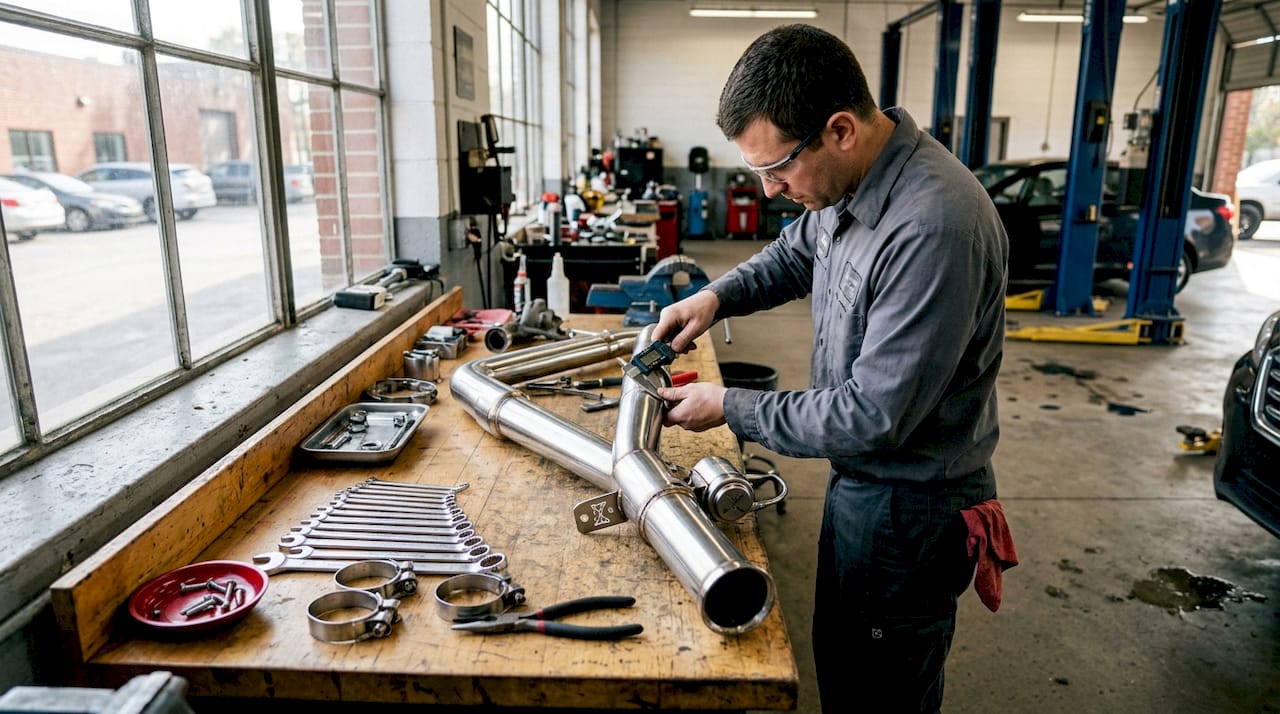
Scavenging is the process where outgoing exhaust gases pull fresh intake charge into the cylinder. When pipe diameter is too large, that pulse weakens at low RPM. The tuner then has to redesign fuel and ignition maps to recover lost torque, which adds complexity and rarely fully restores the original drivability.
Routing matters just as much as diameter. A longer exhaust path changes the timing of pressure waves returning to the cylinder head. That timing affects when the intake valve opens relative to exhaust scavenging, which shifts the power band. Tuners working with non-stock routing must account for these timing shifts in their maps, which is why two vehicles with identical engines but different exhaust layouts often require completely different tune files.
- Pipe diameter too large: Weakens scavenging, kills low-end torque, demands custom map corrections
- Pipe diameter too small: Creates excessive backpressure, limits peak power, reduces high-RPM breathing
- Non-stock routing: Shifts exhaust pulse timing, alters power band, requires routing-specific tune
- Correct sizing for power level: 2.5" for street engines under 300 hp, 3" for high-output builds above 400 hp
Pro Tip: Before buying any exhaust system, confirm the pipe diameter matches your engine’s actual horsepower output, not your target output. Tuning can compensate for some mismatch, but it cannot fully recover the torque lost from an oversized pipe on a street-driven naturally aspirated engine.
Backpressure also carries a counterintuitive truth. Backpressure benefits street-driven naturally aspirated engines by supporting low-end torque and drivability. The “unrestricted flow” myth leads many enthusiasts to buy the largest pipe available, then wonder why their car feels sluggish below 3,500 RPM. The tuner ends up spending hours correcting a problem that better exhaust sizing would have prevented entirely.
How catalytic converter changes force specific tuner requirements
Catalytic converter presence or deletion is the single biggest driver of tuner compatibility decisions. Oxygen sensors positioned before and after the catalytic converter use the converter’s chemical activity to calculate fuel trim and confirm combustion efficiency. Remove the converter, and those sensors report readings the stock ECU was never programmed to accept.
The result is predictable. Emissions deletions without matched tuning cause limp mode, failed regen cycles, and diagnostic trouble codes that disable normal engine operation. The ECU interprets the missing converter signal as a critical fault and reduces power to protect the engine. A tuner that cannot suppress those fault codes or remap the oxygen sensor logic is the wrong tuner for a catless build.
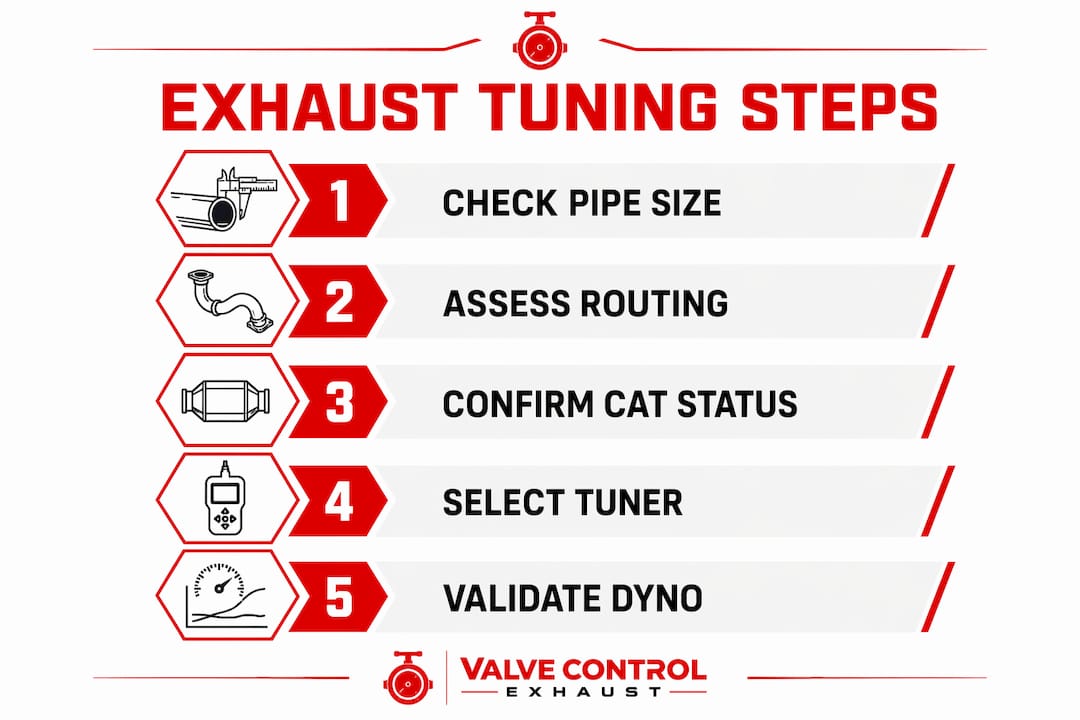
Selecting the right tuner for an emissions-modified vehicle requires confirming five specific variables:
- Model year compatibility: Tuner firmware must match the exact production year of the vehicle, not just the generation.
- ECM compatibility: The tuner must support the specific engine control module variant installed in that vehicle.
- Transmission tuning support: Automatic transmission shift logic often needs recalibration alongside engine maps after exhaust changes.
- Device unlock status: A tuner locked to another vehicle’s VIN cannot write to a new ECM. Modern ECU security locks tuning devices to specific VINs, making used tuners a serious risk.
- Legal compliance: Emissions-related modifications carry legal restrictions in many states. Confirm local regulations before deleting any emissions hardware.
Tuning after a catalytic converter change is not optional. Professional tuning corrects ECU response to hardware changes, not just adds power. A tuner that handles fault suppression, oxygen sensor remapping, and fuel trim correction is the minimum requirement for a catless or high-flow cat system to function reliably.
Why dyno testing is the only reliable validation after exhaust changes
The stock ECU has a limited self-correction range. Cat-back exhausts sometimes fall within that range, but only professional dyno verification can confirm whether the ECU is actually compensating safely or simply masking a problem that will surface later under load.
Dyno tuning is the only reliable method for fine-tuning fuel and ignition maps after exhaust modifications. Without it, engine damage and drivability loss risks increase even when no check engine light appears immediately. A 2021 Subaru Legacy project demonstrated this directly: after a full exhaust swap and dynamometer tuning, the build produced a 12% horsepower increase with zero check engine lights. The dyno session confirmed the tune was safe across the full RPM range, not just at peak power.
The risk of skipping dyno validation is not theoretical. An engine running lean under wide-open throttle because the tune does not account for the new exhaust flow will not always trigger a fault code before damage occurs. Piston damage, valve seat wear, and detonation events can accumulate over dozens of pulls before becoming catastrophic. The dyno session catches those conditions in a controlled environment where the tuner can adjust maps in real time.
Enthusiasts who install aftermarket exhaust systems and rely on generic off-the-shelf tune files take on real risk. Generic maps are built for average hardware configurations. Your specific pipe diameter, routing, and converter setup will differ from that average. The tuner must see your actual airflow data on a dyno to write a map that fits your exact build.
Practical tuner selection criteria based on exhaust packaging
Matching a tuner to your exhaust hardware requires checking specific variables before purchase, not after installation. The most common and costly mistake is buying a tuner based on brand reputation alone without confirming it supports your exact ECM variant and exhaust configuration.
All-in-one kits that bundle matched hardware and tuning software eliminate the most common compatibility failures. These kits are built around confirmed hardware pairings, which means the tuner firmware is already validated against the exhaust components included. Enthusiasts who build their own combinations from separate components carry the full burden of confirming compatibility themselves.
Pro Tip: Never buy a used tuner without confirming its unlock status in writing from the seller. Modern ECU security locks tuning devices to specific VINs. A used tuner that is still locked to a previous vehicle is non-functional and requires manufacturer intervention to unlock, which can take weeks.
The table below summarizes the key variables to verify before committing to a tuner based on your exhaust setup:
| Variable | What to confirm |
|---|---|
| Pipe diameter and sizing | Tuner map library includes calibrations for your specific pipe size |
| Catalytic converter status | Tuner supports fault suppression for catless or high-flow cat systems |
| ECM variant | Tuner firmware matches your exact ECM part number, not just engine family |
| Device unlock status | Tuner is new or confirmed unlocked from previous VIN |
| Transmission type | Tuner supports automatic or manual transmission logic for your gearbox |
Second-hand tuners represent a specific risk category. Used tuners locked to prior VINs require long repair cycles that leave vehicles non-functional. The cost savings on a used device rarely offset the downtime and manufacturer unlock fees. For turbocharged builds, the turbo exhaust interaction with tuner selection adds another layer of complexity, since boost pressure targets and wastegate logic must also align with the exhaust layout.
Key Takeaways
Exhaust packaging directly determines which tuner can safely and effectively recalibrate your ECU after hardware changes.
| Point | Details |
|---|---|
| Pipe diameter drives tuner complexity | Oversized pipes kill low-end torque and force tuners to rebuild maps from scratch. |
| Catalytic converter status sets tuner requirements | Catless builds require tuners with fault suppression and oxygen sensor remapping capability. |
| Dyno validation is non-negotiable | Generic tunes cannot account for your specific exhaust layout; only dyno data confirms safety. |
| Used tuners carry VIN-lock risk | Modern ECU security locks devices to specific VINs, making used tuners a costly gamble. |
| All-in-one kits reduce compatibility failures | Bundled hardware and software kits eliminate the most common mismatch errors on installation. |
What I’ve learned from watching enthusiasts get this wrong
The most consistent mistake I see is enthusiasts treating exhaust selection and tuner selection as two separate decisions. They buy the exhaust based on sound and looks, then figure out the tuner later. That sequence creates problems that are expensive to fix.
Bigger exhaust is not always better. A 3" catback on a naturally aspirated street car often produces worse real-world performance than a correctly sized 2.5" system with a proper tune. The physics of exhaust scavenging do not care about aesthetics. The tuner ends up fighting the hardware instead of working with it.
The other pattern I see regularly is enthusiasts underestimating how much the catalytic converter status changes the tuner requirement. Swapping to a high-flow cat or going catless is not a bolt-on modification from a tuning perspective. It changes the sensor environment the ECU operates in, and the tuner must be selected specifically for that new environment.
My recommendation is always the same: decide on your exhaust packaging first, confirm the pipe sizing matches your power level and driving style, then select a tuner that is explicitly validated for that hardware configuration. Seek a professional dyno session after installation. The cost of that session is always less than the cost of diagnosing engine damage from a mismatched tune.
— Info
Valvecontrolexhaust systems built for tuning compatibility
Valvecontrolexhaust designs exhaust systems for high-performance vehicles like Audi, BMW, Ferrari, and Lamborghini with tuner compatibility built into the engineering from the start. The adjustable valve architecture allows real-time control over exhaust flow and sound, which means the system works with your ECU rather than against it.

For enthusiasts who want exhaust hardware that pairs cleanly with professional tuning, Valvecontrolexhaust offers systems sized and routed to match the tuning requirements of each specific platform. The result is a setup where the dyno session confirms gains rather than corrects problems. Explore the full range of customizable exhaust options and see how each system is matched to the tuning demands of your vehicle. For Audi owners, the Audi exhaust customization guide covers platform-specific sizing and tuner compatibility in detail.
FAQ
Why does exhaust pipe diameter affect tuner selection?
Pipe diameter changes exhaust gas velocity and scavenging efficiency, which alters the airflow data the ECU reads. Tuners must remap fuel and ignition tables to match the new flow characteristics, and not all tuners support the calibration depth required for significant diameter changes.
Do I need a tune after installing a cat-back exhaust?
Cat-back systems sometimes fall within the stock ECU’s self-correction range, but dyno verification is the only way to confirm the ECU is compensating safely. Skipping verification risks drivability loss and engine damage that may not trigger a check engine light immediately.
What happens if I use the wrong tuner after removing my catalytic converter?
The wrong tuner causes limp mode, failed regen cycles, and persistent diagnostic trouble codes. The ECU interprets the missing converter signal as a critical fault and reduces engine power to protect itself.
How do I confirm a used tuner is safe to buy?
Confirm the device is unlocked from its previous VIN before purchase. Modern ECU security locks tuning devices to specific vehicle identification numbers, and a locked used tuner requires manufacturer intervention to restore function.
What is the safest way to match exhaust hardware with a tuner?
All-in-one kits that bundle matched exhaust hardware and compatible tuning software carry the lowest compatibility risk. These kits are validated as a system, eliminating the guesswork of confirming individual component compatibility.
Recommended
- Tuning the Exit: Practical Evaluation of IPE, FI, Armytrix, Akrapovic, Valvetronic and Ryft Exhausts – Valve Control Exhaust
- Why Exhaust Sound Matters for Performance Vehicles
- Comparing Premium Aftermarket Systems: IPE, FI, Armytrix, Akrapovic, Valvetronic and Ryft Exhausts – Valve Control Exhaust
- Precision Audit: Choosing Between IPE, FI, Armytrix, Akrapovic, Valvetronic and Ryft Exhausts – Valve Control Exhaust