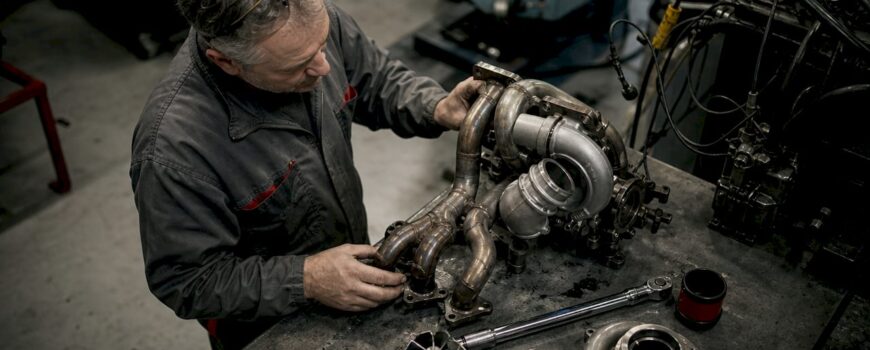
The exhaust system is the primary driver of turbine energy in any forced-induction engine. Its role in turbo performance centers on one core principle: the pressure differential between the exhaust manifold and the turbine outlet is what spins the turbocharger shaft. Get that balance wrong in either direction and you sacrifice boost, power, and long-term reliability. This article breaks down how exhaust backpressure, system geometry, leak location, and aftermarket upgrades each affect turbo spool speed, boost response, and drivetrain efficiency. Key entities covered include the Exhaust Manifold Absolute Pressure (EMAP) ratio, wastegates, and turbine drive pressure.
How does exhaust backpressure affect turbo performance and engine efficiency?
Exhaust backpressure is the resistance to exhaust gas flow between the exhaust valve and the turbine inlet. A measured amount of this pressure is not just acceptable. It is necessary for turbine rotation, supplying the drive energy that spins the compressor wheel and builds boost. The problem starts when backpressure exceeds what the turbine needs.
When backpressure climbs too high, the pressure differential across the turbine shrinks. The turbo shaft slows, boost drops, and the engine has to work harder to push exhaust gases out during each stroke. That extra work shows up as increased pumping losses, which directly reduce power output and raise fuel consumption. Studies confirm that boost pressure drops sharply as backpressure rises, compressing the turbine and compressor pressure ratios simultaneously.
The thermal consequences are equally serious. Restricted exhaust flow traps heat in the combustion chamber and exhaust ports, spiking exhaust gas temperatures (EGTs). Higher EGTs accelerate bearing wear and can warp turbine housings. In extreme cases, turbine drive pressure reaches 2.5 to 3 times boost pressure, placing catastrophic shaft loads on the turbocharger. Backpressure readings above roughly 1.5 to 2 bar are a clear signal that a restriction exists and needs correction before the turbo fails.
The fuel economy angle is often overlooked. Research on diesel engines shows that excessive backpressure impairs combustion, increasing residual gases in the cylinder, delaying ignition, and reducing heat release rate. The result is higher brake-specific fuel consumption. The same physics apply to gasoline turbocharged engines. Optimal efficiency occurs with moderate load and low exhaust backpressure, typically at or below 45 kPa in diesel applications.
Key effects of excessive backpressure at a glance:
- Reduced pressure differential across the turbine, slowing shaft speed
- Lower boost pressure and delayed spool response
- Elevated EGTs increasing thermal stress on turbo components
- Higher pumping losses reducing net engine power
- Increased fuel consumption from impaired combustion efficiency
Pro Tip: Install a pre-turbine pressure sensor when tuning a modified turbo setup. Comparing that reading against boost pressure gives you the EMAP ratio in real time, which is the most direct indicator of whether your exhaust is helping or hurting the turbo.
What effects do exhaust system design and geometry have on turbo power delivery?
Exhaust geometry is where most of the nuance in turbo tuning lives. Pipe diameter, manifold runner length, collector design, and bend radius all influence how efficiently exhaust pulses reach the turbine. Pressure losses from manifold and pipe geometry directly compromise scavenging efficiency, reducing both power and fuel economy across the rpm range.
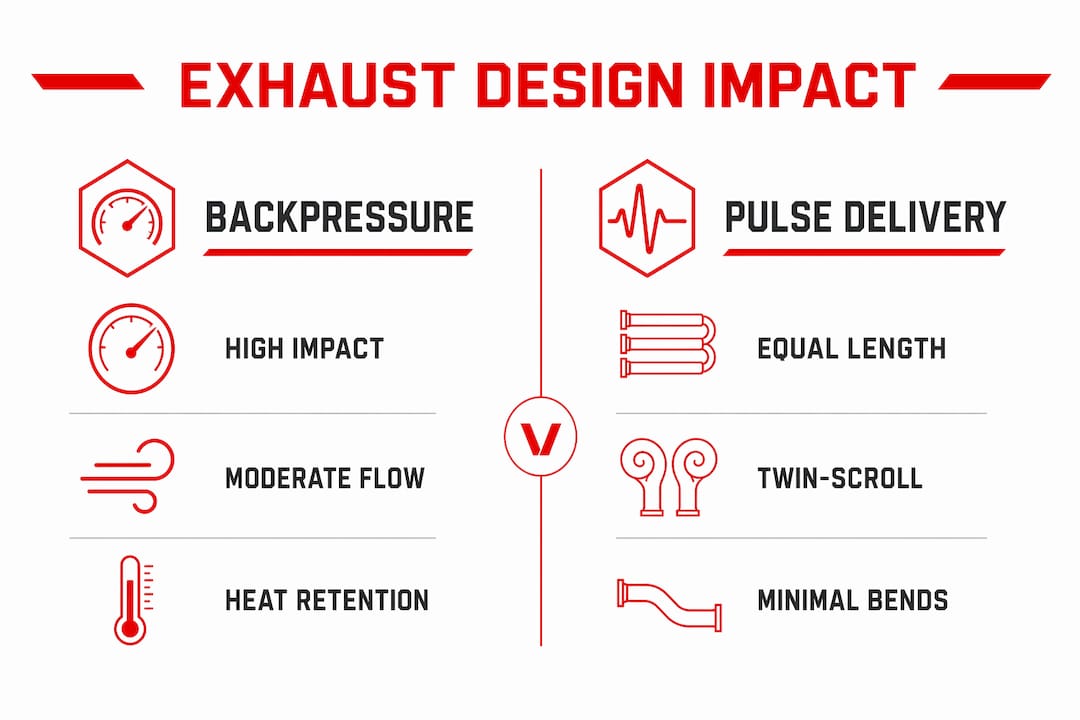
Pipe diameter is a classic trade-off. Larger diameter pipes reduce backpressure but also reduce exhaust gas velocity. Lower velocity means weaker pulse energy arriving at the turbine, which slows spool and delays boost. Smaller pipes maintain velocity and pulse strength but restrict flow at high rpm. The correct diameter depends on engine displacement, target boost level, and the turbocharger’s operating map.
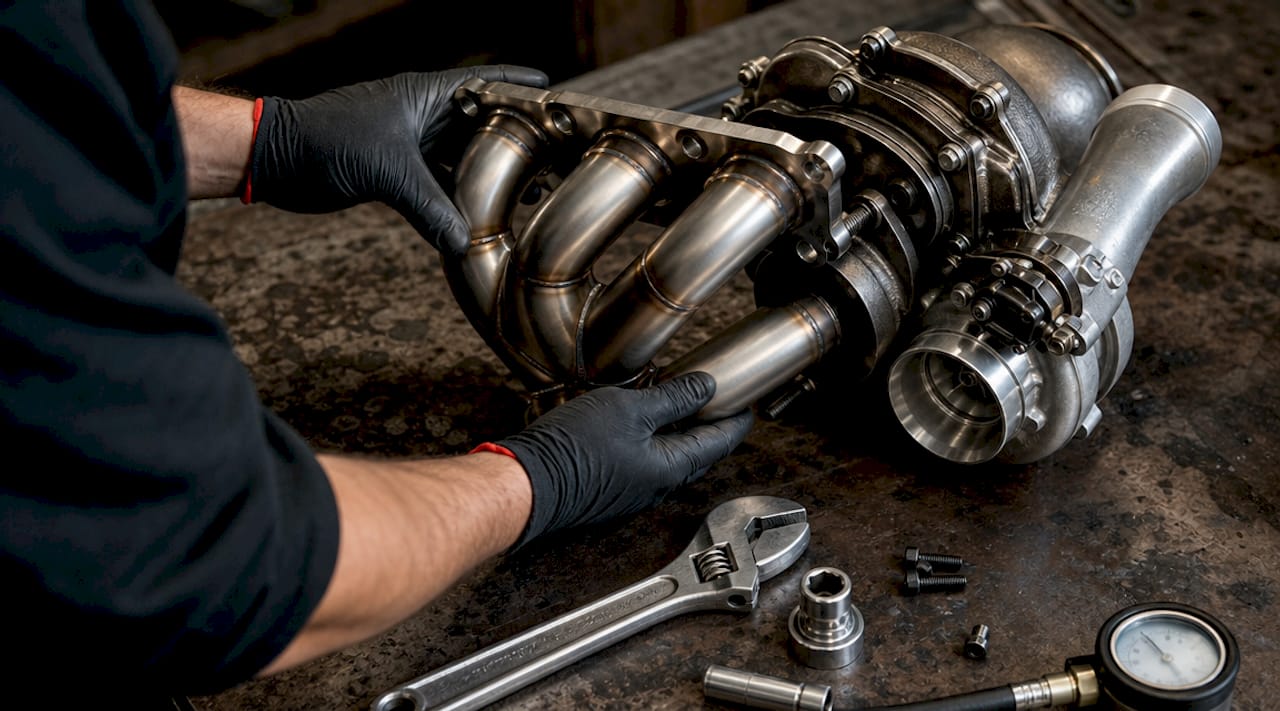
Exhaust manifold design has an outsized impact on turbo response. Equal-length manifolds deliver exhaust pulses to the turbine at consistent intervals, keeping the turbine wheel spinning smoothly and reducing lag. Unequal-length manifolds, common on factory applications for packaging reasons, create uneven pulse timing that can cause turbine speed fluctuations. The role of exhaust headers in power delivery is most visible in the mid-range, where pulse scavenging either helps or hurts cylinder filling.
| Header type | Backpressure | Pulse delivery | Best application |
|---|---|---|---|
| Equal-length tubular | Low | Consistent, strong | Track and performance builds |
| Unequal-length cast | Moderate to high | Uneven | OEM packaging constraints |
| Log-style manifold | High | Weak | Budget or space-limited builds |
| Twin-scroll manifold | Low to moderate | Separated, efficient | Modern factory turbos |
Pro Tip: On a twin-scroll turbo, pairing it with a divided manifold that keeps cylinder groups separated preserves pulse energy all the way to the turbine. Mixing the exhaust streams before the turbine defeats the purpose of the twin-scroll design entirely.
Bends and joints also matter. Every 90-degree bend in an exhaust system adds measurable flow resistance. Mandrel bends, which maintain a consistent internal diameter through the curve, reduce that resistance compared to crush bends. For turbocharged applications where exhaust tuning requires precise flow management rather than maximum flow alone, mandrel-bent systems are the standard choice in any serious build.
How do pre-turbo and post-turbo exhaust leaks differ in their impact?
Exhaust leak location determines everything about how a leak affects turbo performance. The turbine is the dividing line. Leaks upstream of the turbine bleed off the exhaust energy that would otherwise spin the wheel. Leaks downstream of the turbine have almost no effect on boost because the turbine has already extracted its energy from the gas.
A pre-turbo leak, whether from a cracked up-pipe, a failed manifold gasket, or a loose flex joint, reduces peak boost by 3 to 5 PSI or more depending on severity. Turbo lag increases because the turbine receives less energy during the spool phase. EGTs rise because hot gases escaping before the turbine add undirected heat to the engine bay rather than doing useful work. The symptoms closely mimic a failing turbocharger, which is why pre-turbo leaks are frequently misdiagnosed as turbo failure, leading to unnecessary and expensive replacements.
Common pre-turbo leak sources to inspect:
- Up-pipe welds and flex sections on diesel trucks (Duramax, Powerstroke, Cummins applications)
- Exhaust manifold gaskets, particularly on high-heat aluminum heads
- Turbo inlet flange connections and V-band clamps
- Wastegate actuator housing cracks on cast manifolds
Post-turbo leaks, by contrast, are mostly a noise and emissions issue. A crack in the downpipe or a loose mid-pipe joint lets exhaust escape after the turbine has already done its work. Boost pressure is unaffected. The practical concern is cabin odor, failed emissions tests, and the annoying tick or hiss that appears under load. Addressing them matters for comfort and compliance, but not for turbo output.
Catching leaks early requires a smoke test or a careful listen at cold start before the metal expands and seals minor gaps. Routine inspection of gaskets and flexible connections every 30,000 miles is the most cost-effective way to avoid a misdiagnosis that costs you a turbocharger you did not need to replace.
What practical modifications improve exhaust flow and turbo response?
Reducing unnecessary backpressure while preserving turbine drive pressure is the goal of every exhaust upgrade on a turbocharged engine. The two objectives pull in opposite directions, which is why exhaust upgrades for turbo applications require more thought than simply buying the largest diameter pipe available.
Downpipe diameter is the single highest-impact upgrade on most factory turbocharged cars. OEM downpipes are often undersized to meet noise regulations, and replacing a 2.5-inch factory downpipe with a 3-inch unit on a platform like the BMW N55 or Audi 2.0T produces measurable spool improvement and peak power gains. Catless downpipes maximize flow but eliminate emissions compliance. High-flow catalytic converter downpipes offer a practical middle ground for street-driven cars.
Muffler selection affects the post-turbo side of the system. Straight-through perforated core mufflers, used by brands like Akrapovic and Armytrix, minimize restriction while managing sound. Chambered mufflers create more backpressure but produce a more aggressive tone. For turbocharged applications, straight-through designs are preferred because post-turbo restriction still raises EGTs and increases pumping losses even if it does not directly reduce boost.
Valved exhaust systems add a dimension that fixed systems cannot. By opening or closing butterfly valves in the exhaust path, systems from brands like IPE, Valvetronic, and Ryft let you run a more open exhaust under hard acceleration while closing valves at cruise or in residential areas. Valvecontrolexhaust specializes in exactly this technology for platforms including Ferrari, Lamborghini, Audi, and BMW. The performance benefit is real: an open valve position reduces backpressure during peak load while the closed position retains exhaust velocity at lower rpm for better spool. You can explore how aftermarket exhaust improves response across different turbo setups in detail.
Heat retention between the manifold and turbo inlet also matters. Ceramic-coated or thermally wrapped exhaust manifolds keep gas temperature and velocity higher, delivering more energy to the turbine. This is particularly effective on small-displacement turbocharged engines where exhaust gas cooling in a long manifold runner is a real spool penalty.
Pro Tip: Before buying any exhaust component, map your current pre-turbine and post-turbine pressures at peak load. That data tells you exactly where the restriction lives and which component upgrade will produce the largest gain.
Key takeaways
Exhaust system design directly controls turbine drive pressure, and getting that balance right determines whether a turbo engine reaches its power and efficiency potential.
| Point | Details |
|---|---|
| Backpressure has a threshold | Moderate backpressure drives the turbine; beyond 1.5 to 2 bar it causes shaft overload and turbo damage. |
| Geometry shapes power delivery | Equal-length manifolds and mandrel-bent pipes preserve pulse energy and reduce flow losses across the rpm range. |
| Leak location is everything | Pre-turbo leaks cut boost by 3 to 5 PSI or more; post-turbo leaks affect sound and emissions only. |
| Valved systems offer real gains | Adjustable exhaust valves reduce backpressure under load while maintaining velocity at lower rpm for faster spool. |
| Diagnose before replacing | Checking for exhaust restrictions and leaks before replacing a turbo prevents costly repeat failures. |
Why most exhaust tuning advice misses the point
Most exhaust advice for turbocharged engines defaults to “less backpressure is always better.” That framing is incomplete and it leads to real mistakes. I have seen builds where enthusiasts installed the largest diameter exhaust they could find, only to end up with slower spool and a flat mid-range because exhaust gas velocity dropped below what the turbine needed to stay on its operating map.
The honest truth is that exhaust tuning for turbo applications is pressure management, not just flow maximization. You need enough drive pressure to keep the turbine spinning efficiently at the rpm where you want boost to arrive. You need that pressure to drop off quickly after the turbine extracts its energy so pumping losses stay low. Those two requirements point to different solutions in different parts of the exhaust system, and treating them as one problem is where most builds go wrong.
The other mistake I see constantly is skipping leak inspection when diagnosing a lazy turbo. A cracked up-pipe or a weeping manifold gasket produces symptoms that look exactly like a worn turbocharger. Replacing the turbo without checking for exhaust restrictions first guarantees the new unit will develop the same symptoms within months. Spend 20 minutes with a smoke machine before spending $1,500 on a turbo.
Finally, do not underestimate heat management. Keeping exhaust gas hot and fast between the manifold and turbine inlet is free performance on any build. Ceramic coating costs less than a downpipe and delivers consistent spool improvement, especially in cold climates where heat loss through uncoated cast iron manifolds is significant.
— Info
Upgrade your turbo’s exhaust system with the right hardware
If you are ready to act on what you have learned, the exhaust component you choose matters as much as the concept behind it. Valvecontrolexhaust has evaluated the leading high-performance exhaust systems available for turbocharged luxury and sports cars, covering IPE, FI Exhaust, Armytrix, Akrapovic, Valvetronic, and Ryft in direct comparison.

Their high-end exhaust system comparison covers flow characteristics, valve control features, fitment for platforms like the BMW M3, Ferrari 488, and Audi RS6, and real-world performance impact. If you want a structured buying decision rather than guesswork, the performance exhaust buyer’s guide walks through every major variable for turbocharged applications.
FAQ
What is the role of exhaust in turbo performance?
The exhaust system supplies turbine drive pressure by directing hot, pressurized exhaust gases across the turbine wheel, spinning the compressor and building boost. The exhaust must balance providing enough drive pressure to maintain shaft speed while minimizing backpressure to reduce pumping losses.
Does more backpressure always hurt a turbo engine?
No. A measured amount of backpressure between the exhaust valve and turbine inlet is necessary to drive turbine rotation. The problem is excessive backpressure, which reduces the pressure differential across the turbine, drops boost, and raises EGTs to damaging levels.
How much can a pre-turbo exhaust leak reduce boost?
A pre-turbo leak can reduce peak boost by 3 to 5 PSI or more, depending on leak size and location. The symptoms closely resemble turbo failure, making accurate diagnosis critical before any component replacement.
What exhaust upgrade has the biggest impact on turbo spool?
Replacing an undersized OEM downpipe is typically the highest-impact single upgrade for turbo spool and peak power. Pairing it with an equal-length or twin-scroll manifold addresses the pre-turbo side and delivers the most complete improvement in exhaust flow and turbo performance.
Do valved exhaust systems actually improve turbo performance?
Yes. Valved systems from brands like IPE, Armytrix, and Akrapovic reduce backpressure under full load by opening the exhaust path, while closed valve positions maintain exhaust velocity at lower rpm to support faster spool. Valvecontrolexhaust covers these systems in depth for platforms including Ferrari, Lamborghini, and BMW.