

A titanium exhaust system is an aftermarket automotive exhaust constructed wholly or partially from titanium alloy, chosen specifically for its exceptional strength-to-weight ratio, heat resistance, and distinctive sound signature. The industry standard term is “titanium alloy exhaust system,” and the most common alloys used are Ti-6Al-4V (Grade 5) and commercially pure Grade 1 or Grade 2 titanium. Most systems are not fully titanium throughout. Brackets, mid-pipes, and flanges often remain stainless steel for cost and practicality, while the muffler, tail section, and primary pipes carry the titanium components where weight savings matter most. For performance-focused drivers running vehicles like a BMW M3, Ferrari 488, or Lamborghini Huracán, the material choice directly affects lap times, sound character, and long-term durability.
What is a titanium exhaust system made of?
Titanium exhaust systems use two primary alloy grades depending on the application. Ti-6Al-4V, also called Grade 5, delivers the highest strength and is favored for headers and primary pipes exposed to extreme heat and mechanical stress. Grade 2 commercially pure titanium is softer and more formable, making it the preferred choice for muffler canisters and tailpipe sections where shaping complexity matters more than raw tensile strength.
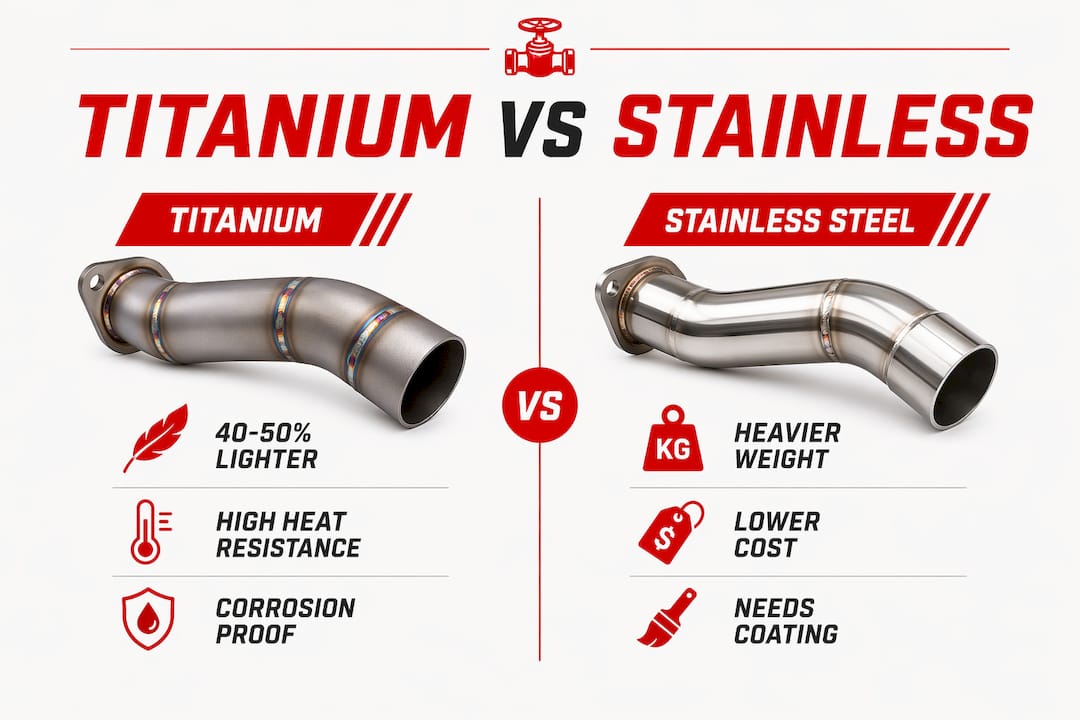
The material properties separate titanium from every other exhaust metal on the market. Titanium sustains continuous operating temperatures above 800°C without warping or fatigue. That threshold matters because exhaust gas temperatures in turbocharged and high-revving naturally aspirated engines regularly spike past 700°C under hard acceleration. Stainless steel, by comparison, begins to lose structural integrity and discolor permanently at sustained temperatures above 600°C.
Titanium vs. stainless steel: the core differences
The weight gap between titanium and stainless steel is the headline figure every enthusiast cites. Titanium is approximately 40 to 50% lighter than comparable stainless steel exhausts, translating to 5 to 8 kg saved on a cat-back system and 10 to 15 kg on a full turbo-back setup. That kind of unsprung and rear-biased weight reduction improves acceleration response and shifts the car’s weight distribution in measurable ways.
Corrosion resistance is another decisive advantage. Titanium forms a natural self-protective oxide layer that prevents rust and salt-induced corrosion without any coating or treatment. Stainless steel resists corrosion well but is not immune, particularly at weld joints and in road-salt environments. Titanium’s oxide layer regenerates if scratched, which means the protection is permanent rather than surface-level.
| Property | Titanium | Stainless Steel |
|---|---|---|
| Weight | 40 to 50% lighter | Heavier baseline |
| Max continuous temp | Above 800°C | Degrades above 600°C |
| Corrosion resistance | Self-healing oxide layer | Good but not immune |
| Cost premium | 30 to 50% more (sometimes 2 to 4x) | Lower cost |
| Fabrication difficulty | Requires argon TIG welding | Standard TIG welding |
Pro Tip: If you are comparing systems by weight spec sheets, ask for the total system weight including brackets and hangers. Some manufacturers quote only the pipe weight, which inflates the apparent savings.
How does a titanium exhaust affect performance and sound?
The performance impact of switching to titanium is most pronounced on track-focused builds where every kilogram removed from the rear of the car improves cornering balance and braking stability. For a time-attack Porsche 911 GT3 or a track-day Audi RS3, removing 8 to 12 kg from the exhaust system produces a noticeable shift in how the car rotates through corners. Daily drivers on public roads will feel the weight reduction less acutely, but the improvement in throttle response is real regardless of use case.
Thermal behavior is the less-discussed performance factor. Because titanium conducts heat poorly compared to stainless steel, exhaust gases stay hotter inside the pipe for longer. Higher gas temperature means higher gas velocity, which maintains scavenging efficiency and supports power output at high rpm. The practical result is that a well-designed titanium system can support marginally better top-end power than a stainless equivalent of the same diameter, even without changes to pipe sizing.
The sound profile is where titanium creates the most immediate impression. A titanium exhaust delivers a sharper, higher-pitched, metallic note with a characteristic rasp and crackle on overrun that stainless steel simply cannot replicate. The tone is closer to what you hear from factory exhaust systems on Formula 2 cars or GT3 race machinery. Stainless steel produces a deeper, rounder tone that many drivers prefer for road use, while titanium’s sound is more aggressive and exotic.
Key performance and sensory characteristics of titanium exhausts include:
- Weight reduction of 5 to 15 kg depending on system scope, directly improving power-to-weight ratio
- Higher exhaust gas velocity from low thermal conductivity, supporting top-end engine efficiency
- Lower underbody temperatures because heat stays inside the pipe rather than radiating outward
- Distinctive metallic exhaust note with rasp and crackle that intensifies under hard acceleration
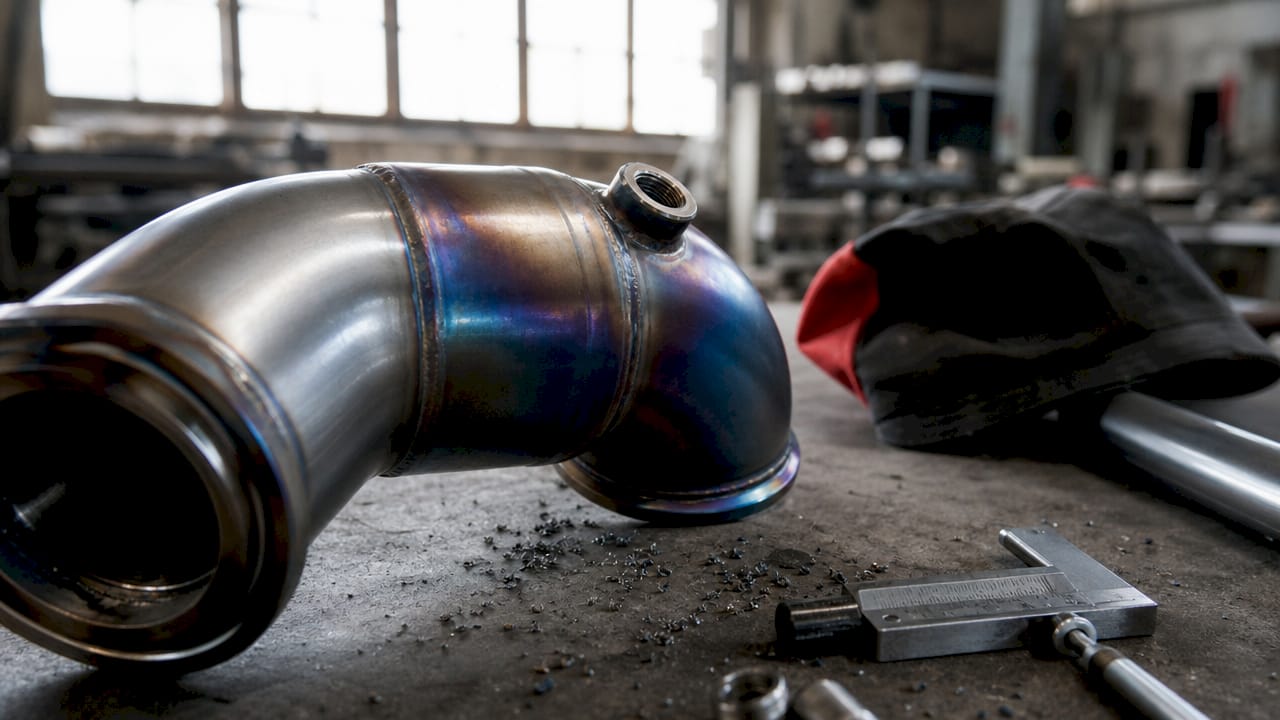
- Heat tint coloring at welds and bends, producing blue-purple visual signatures that indicate operating temperature and are considered a mark of authenticity by enthusiasts
The heat tint is worth understanding beyond aesthetics. The color spectrum from gold through blue to purple corresponds to specific temperature ranges at the metal surface. A system showing deep blue tints at the headers has been operating at sustained high temperatures, which confirms the engine and exhaust are working as intended under load.
What are the manufacturing and maintenance considerations?
Fabricating a titanium exhaust system is significantly more demanding than working with stainless steel. The welding process requires specialized TIG welding in an argon-purged environment to prevent oxygen contamination of the weld pool. Oxygen exposure during welding causes titanium to become brittle and prone to fatigue cracking, which can lead to premature failure even on a system that looks visually clean.
The steps that separate quality titanium fabrication from substandard work are specific and non-negotiable:
- Back-purge the weld zone with argon gas flowing through the inside of the pipe to displace oxygen before and during welding.
- Use dedicated titanium tooling that has never contacted steel, since steel contamination embeds into titanium and creates corrosion initiation points.
- Control heat input precisely during TIG welding to avoid grain growth in the heat-affected zone, which reduces ductility.
- Design flexible mounting points that allow thermal expansion and contraction without transmitting stress to weld joints.
- Inspect welds visually for consistent coloring. A properly purged titanium weld shows a bright silver or light gold color. Dark gray or black coloring indicates oxygen contamination and the weld must be rejected.
Maintenance requirements for titanium exhausts are lower than stainless steel in most respects. The self-healing oxide layer eliminates rust concerns, and the material does not require heat-resistant coatings. The vulnerability that does exist is physical impact. Titanium is harder than stainless steel but less ductile, meaning a sharp impact from road debris can crack a titanium pipe where stainless steel would dent and survive. Choosing a manufacturer with documented titanium fabrication experience is the single most important purchasing decision you can make.
Pro Tip: Ask any manufacturer for weld photos taken under magnification before purchasing. A reputable titanium exhaust builder will provide these without hesitation. Consistent silver-gold weld coloring is the visual proof of correct argon purging.
Who should buy a titanium exhaust system?
The honest answer is that titanium exhausts are not the right choice for every driver. The cost premium of 30 to 50% over comparable stainless steel systems, and sometimes two to four times the price depending on brand and construction, means the investment only makes sense when weight and performance are genuine priorities rather than aspirational ones.
Track day enthusiasts and time-attack competitors get the clearest return on investment. For these drivers, the weight reduction benefits translate directly into faster lap times and better handling balance. Lightweight builds targeting specific power-to-weight targets, such as a stripped Lotus Elise or a dedicated circuit BMW E46 M3, benefit from titanium as part of a broader weight reduction program. Brands like Akrapovic, IPE, and Armytrix offer titanium options specifically engineered for these applications, and a comparison of high-performance exhaust brands can help you identify which system matches your vehicle and goals.
| Driver Profile | Titanium Worth It? | Better Alternative |
|---|---|---|
| Track day and time attack | Yes, clear performance return | N/A |
| Lightweight build project | Yes, part of weight program | N/A |
| Daily driver, street use | Marginal, mainly sound and aesthetics | Stainless steel |
| Budget-conscious enthusiast | No, cost premium is hard to justify | Stainless steel |
| Luxury sports car owner | Yes, for sound and prestige | Valved stainless system |
For daily drivers who want an improved exhaust note without the cost premium, a high-quality stainless steel system with a valved design delivers most of the sound benefit at a fraction of the price. The decision ultimately comes down to whether you are building for performance metrics or personal enjoyment.
Key takeaways
A titanium exhaust system delivers meaningful performance advantages over stainless steel, but only when fabrication quality is high and the driver’s use case genuinely demands reduced weight.
| Point | Details |
|---|---|
| Material grades matter | Ti-6Al-4V suits high-heat sections; Grade 2 suits muffler and tailpipe shaping. |
| Weight savings are real | Titanium saves 5 to 15 kg per system, improving handling and acceleration on track. |
| Sound is distinctly different | Titanium produces a sharper, metallic, higher-pitched note compared to stainless steel. |
| Fabrication quality is critical | Argon back-purge TIG welding is mandatory; poor welds cause cracking and early failure. |
| Cost justification depends on use | Track and lightweight builds justify the premium; daily drivers often do not. |
Why fabrication quality matters more than brand name
After years of evaluating exhaust systems across platforms ranging from Audi RS models to Ferrari V8s, the single factor that separates a titanium exhaust that lasts a decade from one that cracks within two seasons is fabrication quality. Not the brand logo on the tip. Not the price point. The weld.
I have seen systems from well-marketed brands fail at the collector because the shop used contaminated tooling or skipped the back-purge step to save time. I have also seen small-batch fabricators produce titanium systems that outlast the cars they were fitted to. The heat tint on a properly welded titanium system tells you everything. Consistent gold-to-blue coloring across the weld bead means the argon coverage was correct and the metal was protected. Blotchy gray or black patches mean oxygen got in, and that weld is already compromised.
The other mistake enthusiasts make is buying titanium before addressing the rest of the drivetrain. A titanium exhaust on a car with stock engine mounts, worn suspension bushings, and a heavy battery in the trunk is not going to transform the driving experience. Titanium exhaust upgrades pay off most when they are part of a considered weight reduction and performance program, not a standalone purchase made for the sound alone. For drivers who want sound customization without committing to a full titanium build, a valved exhaust system gives you real-time control over the exhaust note and is often the smarter first step.
— Info
Explore titanium and valved exhaust options at Valvecontrolexhaust
Valvecontrolexhaust specializes in high-performance exhaust systems for vehicles like Audi, BMW, Ferrari, and Lamborghini, including systems that incorporate titanium components from leading brands such as Akrapovic, IPE, and Armytrix. Their valved exhaust technology lets you control exhaust sound and performance in real time, which means you can run a quiet mode for daily commuting and open the valves fully on track without swapping systems.
If you are researching your next exhaust upgrade and want to understand how titanium options compare across brands and price points, the performance exhaust buyer’s guide at Valvecontrolexhaust covers the full spectrum from entry-level stainless to full titanium race systems. You can also explore customizable exhaust options designed specifically for enthusiasts who want both performance and sound control in a single system.
FAQ
What is a titanium exhaust system?
A titanium exhaust system is an aftermarket exhaust built wholly or partially from titanium alloy, most commonly Ti-6Al-4V or Grade 2 commercially pure titanium. It is chosen for its weight reduction, heat resistance above 800°C, and distinctive metallic exhaust note.
How much lighter is a titanium exhaust vs. stainless steel?
Titanium exhausts are approximately 40 to 50% lighter than stainless steel equivalents, saving 5 to 8 kg on a cat-back system and up to 15 kg on a full turbo-back setup.
Why do titanium exhausts turn blue and purple?
The blue-purple heat tint on titanium exhausts is a natural oxidation response to high operating temperatures. It appears at welds and bends and serves as a visual indicator that the system has been running at the temperatures it was designed for.
Are titanium exhausts worth it for daily driving?
For daily drivers, the performance gains from titanium are marginal compared to the cost premium of 30 to 50% over stainless steel. The sound and aesthetic benefits remain, but a high-quality stainless steel system delivers better value for street use.
What brands make titanium exhaust systems?
Akrapovic, IPE, and Armytrix are among the most recognized manufacturers producing titanium exhaust systems for high-performance and luxury sports cars. Each brand uses different alloy grades and construction methods, so comparing specifications directly is the most reliable way to evaluate them.
Recommended
- Remus Carbon 84mm Angled Titanium Internals w/Adjustable Clamp Tail Pipe (Single) – Valve Control Exhaust
- Remus Carbon 102mm Angled Titanium Internals w/Adjustable Clamp Tail Pipe (Single) – Valve Control Exhaust
- Comparing High-End Aftermarket Systems: IPE, FI, Armytrix, Akrapovic, Valvetronic, and Ryft – Valve Control Exhaust
- Akrapovic 2018 Porsche GT3 RS (991.2) Tail Pipe Set (Titanium) – Valve Control Exhaust